52 Baby Wild Animals Coloring Pages for Your KDP Interior
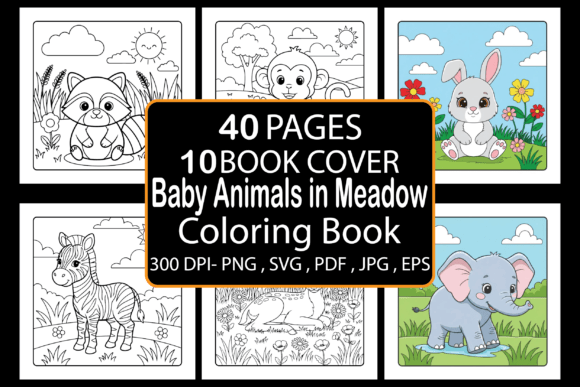
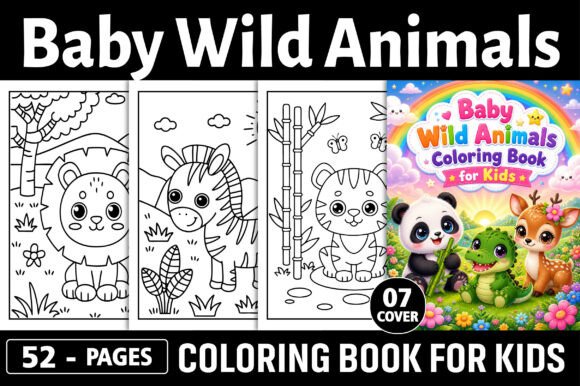
Building a profitable KDP coloring book business starts with strong, consistent interior assets. The 52 Baby Wild Animals Coloring Pages set gives you exactly that: a complete, print-ready collection designed for Amazon Kindle Direct Publishing. Each page features a distinct baby wild animal illustration, from lion cubs and elephant calves to fawns, bear cubs, monkey infants, and baby zebras. The art style leans toward clean, bold line work with enough detail to engage colorists without overwhelming young hands. Think thick, consistent strokes, open spaces for coloring, and charming poses that capture each animal's personality. The overall appeal sits somewhere between educational and playful, making it suitable for both quiet activity time and classroom or homeschool use.
What You Get Inside This Coloring Book Package
This isn't just a handful of random drawings thrown together. The package delivers a full interior solution with the kind of structure that matters when you are preparing a listing for KDP. Here is exactly what is included:
- 52 individual coloring pages, one per baby wild animal species
- 300 DPI resolution across all file formats
- Black and white line art, ready for print
- Standard 8.5 x 11 inch trim size
- 07 PNG images for your book cover
- 01 PDF file, print ready
- 01 EPS file, print ready
- 52 JPG images at 300 DPI
- 52 PNG images with transparent backgrounds
- 52 SVG images for scalability and editing
Having multiple file formats matters more than most new publishers realize. The PDF gives you a single file you can upload directly to KDP with zero additional formatting. The EPS and SVG files let you resize or reposition individual elements if you want to customize the layout. The PNGs with transparent backgrounds are useful if you plan to build a brand identity around your coloring book series or create promotional graphics for social media. That attention to file diversity turns a simple set of coloring pages into a flexible design asset you can repurpose across multiple projects.
Why Page Count and Consistency Matter in KDP Coloring Books
Amazon's algorithm and customer expectations both reward volume and coherence. A coloring book with only twenty or thirty pages can feel thin in the hand, and customers often perceive lower page counts as lower value. Fifty-two pages hits a sweet spot. It is substantial enough to justify a competitive price point without requiring you to source an overwhelming number of illustrations. It also gives you enough variety to cover a full alphabet or, in this case, a generous range of baby wild animals from different continents and habitats.
Consistency in art style across all fifty-two pages is what separates a professional interior from a slapped-together collection. When every illustration shares similar line weights, density, and level of detail, the book feels cohesive. The 52 Baby Wild Animals Coloring Pages set maintains that visual unity. A lion cub and a baby giraffe should feel like they belong in the same book, and they do. That consistency builds trust with buyers and encourages positive reviews, which directly feeds your ranking on the platform.
Practical Applications Beyond a Single KDP Listing
One of the smarter moves you can make as a content creator is to think beyond one product. This coloring book interior can serve as the foundation for multiple listings. Here are a few realistic ways to extend its value:
- Standalone coloring book under a title like Cute Baby Wild Animals Coloring Book or Jungle Babies Coloring Fun
- Volume in a series such as Baby Animals Around the World or My First Wild Animal Coloring Book
- Bundled activity book paired with a puzzle or maze book using complementary cover designs
- Low-content paperback with a matte cover aimed at toddlers and preschoolers
- Digital download on platforms like Etsy or Teachers Pay Teachers using the included PNG or SVG files
Each of these routes targets a slightly different audience. The standalone coloring book works well for parents searching for a quiet activity. The digital download appeals to educators who want to print individual pages for classroom use. The series approach builds a catalog that cross-promotes itself. By using the same interior across multiple product types, you maximize the return on a single creative asset without having to commission new artwork every time.
Visual Hierarchy and Readability in Coloring Pages
You might not think about visual hierarchy when you look at a coloring page, but it is surprisingly relevant. In a well-designed coloring page, the main subject should be immediately clear. Details should support the central animal without competing for attention. Background elements, if present, should frame the subject rather than clutter it. The 52 Baby Wild Animals Coloring Pages handle this well. Each page places the animal front and center, with enough negative space around it to keep the composition breathable. That negative space is not wasted, it is where young colorists practice staying inside the lines and where older users can experiment with shading or pattern fills.
Readability in a coloring book context means something different than it does in a paragraph of body text. Here, readability refers to how easy it is to see the boundaries between different areas of the illustration. Thick, clean lines improve readability. Thin or broken lines frustrate colorists, especially younger ones. The line work in this set is consistently bold enough to be seen clearly when printed, even if a buyer uses a budget printer or standard copy paper. That practical consideration reduces the chance of negative feedback about print quality or page design.
How the Right Interior Affects Brand Perception and Reviews
Your KDP listing is a product, but it is also a reflection of your brand identity. Every element from the cover design to the interior layout shapes how customers perceive you. If a buyer opens a coloring book and finds cramped layouts, inconsistent art, or thin paper showing bleed-through, they associate that poor experience with your brand. If they open a book with spacious 8.5 x 11 inch pages, clear illustrations, and a well-organized interior, they remember that quality. Word of mouth and repeat purchases follow the latter scenario.
Professionalism in a coloring book does not require elaborate typography or complex layouts. It requires thoughtful execution. Each page in this set is a standalone illustration, which means there is no awkward text wrapping, no misaligned borders, no half-finished art near the gutter. The simplicity of the design means fewer things can go wrong during the upload and printing process. That reliability matters when you are managing multiple listings and cannot inspect every proof copy personally.
Consistency across your catalog builds recognition. When a customer buys one of your coloring books and enjoys the experience, they are more likely to purchase another if they recognize a similar interior quality. Using a cohesive asset like this set across multiple books creates that visual and experiential consistency.
Choosing the Right Coloring Pages for Your Target Audience
Not all coloring books appeal to the same demographic. The Baby Wild Animals Coloring Pages sit in a broad but well-defined niche. The illustrations are cute enough to attract parents of toddlers and preschoolers, but detailed enough to hold the attention of older children and even adults who enjoy simple, relaxing coloring. That crossover appeal expands your potential customer base without requiring you to compromise on style.
When evaluating whether this collection fits your project, consider these questions:
- Age range Are you targeting ages two to five, or ages four to eight? The illustrations work for both, but your marketing language and cover design should reflect the intended age group.
- Theme specificity Some buyers search for "jungle animals," others for "safari babies," and others for "woodland creatures." The fifty-two animals cover a mix of habitats, so your title and keywords should align with the most prominent species in the set.
- Price point A 52-page black and white interior at 8.5 x 11 inches supports a price range of about $5.99 to $8.99 on Amazon, depending on cover quality and whether you print in color or black and white.
- Competitive landscape Search for "baby动物 coloring book" and similar terms on Amazon to see what the top listings look like. Note their cover styles, page counts, and review counts. Then position your listing to fill gaps they are missing.
Testing your interior before publishing is a step many new creators skip. Print a few sample pages on your home printer at the actual trim size. Check that the lines are crisp, that the margins leave enough room for binding, and that the paper type you plan to use does not cause bleed-through. The 300 DPI resolution in this set ensures sharp output, but printing conditions vary. A quick test run saves you from discovering issues after your book is live.
Font Pairing and Cover Design Considerations
While the interior of a coloring book does not use much typography, your cover does. You need a title, and possibly a subtitle or author name, that complements the playful wildlife theme. For a baby wild animals coloring book, a cheerful display font with rounded letterforms works well. You want something approachable and friendly, not overly formal. A handwritten font or a sans serif font with soft edges can reinforce the playful, child-friendly tone of the interior.
If you are designing the cover yourself or working with a designer, consider pairing a bold display font for the main title with a lighter sans serif font for the subtitle or author line. That contrast creates visual hierarchy and makes the title pop at thumbnail size. Since Amazon displays covers very small in search results and category pages, the title needs to be legible even when scaled down. Avoid thin script fonts or overly decorative typefaces that blur at small sizes.
The 07 PNG images for book cover included in this package give you a starting point for cover design. You can select a favorite animal illustration, add your title text, and build a cover around that focal point. Keeping the cover art consistent with the interior style helps set accurate expectations. If the cover shows a cute baby lion and the interior includes that same lion, the buyer experiences a seamless connection between your listing images and the physical product.
Practical Recommendations for Listing and Publishing
Once you have your interior file ready and your cover designed, the actual publishing process requires attention to a few key details:
- Bleed settings The 8.5 x 11 inch size with full bleed requires you to set the correct document margins. If your PDF is not formatted for bleed, Amazon may reject it or trim your art incorrectly.
- File naming Use descriptive file names for your interior and cover PDFs. Something like baby-wild-animals-coloring-book-interior.pdf is clearer than final3.pdf.
- Keywords and categories Research relevant keywords using tools like Helium 10 or Publisher Rocket. Target phrases like "baby animal coloring book," "wild animals coloring pages for kids," and "toddler coloring book." Select categories that are specific enough to reduce competition but broad enough to attract meaningful search volume.
- Look Inside feature Upload your PDF with the first several pages displayed so customers can preview the interior quality. Choose pages that show variety in the animals to give a good sense of the full collection.
Commercial font licensing matters if you use a typeface on your cover that requires a paid license. Many fonts available for free use only allow personal use, not commercial products sold on Amazon. Check the licensing terms for any font you use in your cover or promotional materials. The same principle applies to any additional graphics you incorporate beyond the provided illustrations.
Why High Resolution and Multiple File Formats Matter Long-Term
The 300 DPI specification is not just a technical footnote. It affects print sharpness directly. Lower resolution files look pixelated when printed, especially on an 8.5 x 11 inch page where the image is stretched across a large area. At 300 DPI, each illustration prints with clean edges and smooth curves, which is exactly what buyers expect from a professionally produced coloring book. The black and white line art relies entirely on line quality for its appeal, and that quality depends on resolution.
Having SVG and EPS files extends the life of this asset beyond a single book. You can import the SVG files into design software like Canva, Inkscape, or Adobe Illustrator and create custom layouts, activity sheets, posters, or digital products. The modern typography trends in digital publishing increasingly favor versatile assets that work across print and screen. This collection supports that flexibility.
If you decide to expand into other niches, the same file structure and preparation process applies. Once you are comfortable formatting and uploading a coloring book interior, you can scale your catalog efficiently. Each new interior becomes a variation on a proven workflow rather than a completely new learning curve.
The 52 Baby Wild Animals Coloring Pages set is tested on the Amazon KDP platform and ready to upload. That means the formatting, bleed, and trim specifications align with what Amazon expects, reducing the likelihood of upload errors or rejection. For a publisher focused on building a consistent, professional catalog, that reliability translates directly into saved time and fewer headaches.